If you visit Iceland in April, you’ll be visiting mid-spring (although spring in Iceland may not be what you’re used to back home). Still, it’s considered one of the best months to travel to the island for an array of reasons. The best way to explore the country on your own terms is, of course, by having your own transport. But driving in Iceland in Aprilalso not be what you’re used to back home.
So if you’re considering an April road trip through the Land of Fire and Ice, this article is for you. We tell you everything you need to know, from the weather in April and what to expect from our road conditions, to fundamental Icelandic road laws and a few additional local insights.
1. Why is April a Good Time to Go Driving in Your Campervan in Iceland?
There are many reasons why April is a great time to go driving in Iceland, with the most important being:
The weather has drastically improved, so there’s no need to brace yourself for our extreme and harsher weather conditions.
Daylight hours have drastically increased, which means a jam-packed campervan road trip itinerary.
With the weather having improved, there’s a greater opportunity for having all sorts of outdoor adventures, such as kayaking, boat tours, hiking, and so forth.
April is go time for nature here on the island, and not only does our own fauna and flora seem to awaken from their cold slumber, but we even receive a few wild visitors! By late April, the Puffins will start to arrive, and if you look out over the ocean, you may spot one of our migratory whales cruising alongside some of our local giants.
Although some roads are still off-limits, road conditions have drastically improved, which means a road trip adventure is possible for even the most nervous drivers amongst us.
April is considered an off-season month. This means “So long, farewell, auf wiedersehen, adieu” peak season crowds and peak season prices. Add on further savings from having both transport and accommodation sorted by road tripping in a campervan, and you’re looking at a very budget-friendly Icelandic adventure.
Driving in Iceland in April
2. April Weather: An Island in Anticipation of Summer
We have a saying here on the island: “You can experience all four seasons in a day in Iceland,” irrespective of season. So, when visiting Iceland, you always need to come prepared for the unexpected and try to stay one step ahead by keeping a close eye on our weather forecast viaVedur.
However, when we work on general averages and the fact that the country is inching its way toward summer, this is what you can expect from the weather while driving in Iceland in April:
Temperature: Average temperatures range between 0 and 7 degrees Celsius (32 and 45 degrees Fahrenheit), which is a far cry from our below-0 temperatures mid-winter.
Daylight Hours: Daylight hours are ever-increasing in Iceland in April. You can look forward to about 13 hours of daylight when visiting early in April, and it grows to roughly 16 hours by the end of the month.
Rainfall: You can expect an average of around 59 mm (2.3 inches), so it’s definitely not considered one of our wettest months.
Wind Speeds: As the island distances itself more and more from the winter season, wind speeds decrease. So, you’ll find wind speeds averaging about 22 kilometers an hour (13.5 miles an hour) in early April, and they lower to about 18.7 kilometers an hour (11.6 miles an hour) by the end of the month.
Snowfall: April isn’t necessarily known for its snowfall. However, there may be places you’ll still find leftover snow and ice from the winter that hasn’t melted yet, especially when visiting early April. Our northern regions are also notoriously colder with harsher weather conditions, so you may actually still get a light little snowfall flurry there. So, you can rest assured, it’s definitely not at our mid-winter blizzard levels.
Iceland weather in April
3. What to Expect from the Road Conditions in Iceland in April
To understand our road conditions, you also need to understand the different types of roads you’ll find here in Iceland:
Paved, Main Roads
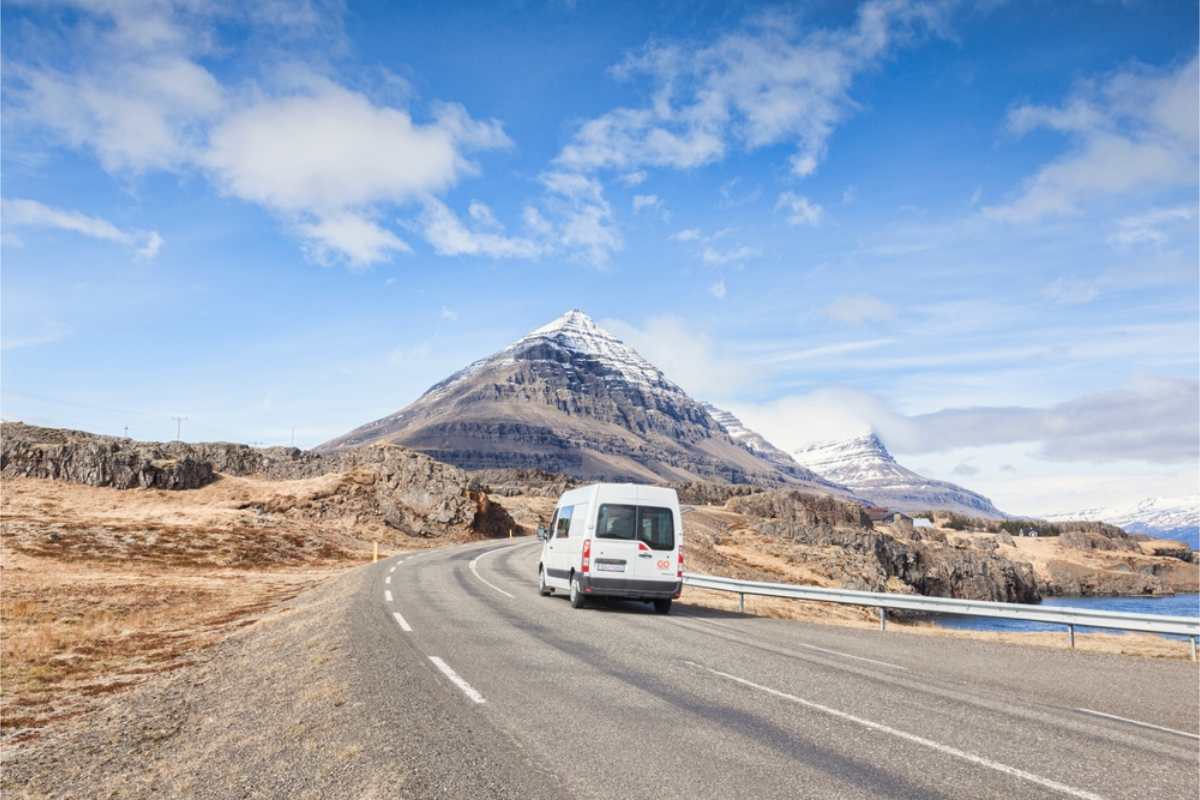
Our paved main roads are well-maintained and usually consist of the roads in and around our cities and towns, as well as our larger logistical routes around the island, such as theRing Road and the Golden Circle (these are also popular road trip routes).
Since these roads are paved and so well-maintained, you’ll rarely find any build-up or snow and ice, especially after our winter season, and the pristine road conditions make driving these roads with a 2WD vehicle possible.
Iceland main roads
Gravel Roads
We’ve got quite a few gravel roads here in Iceland, especially in the countryside and more remote areas, as well as en route to attractions. Still, most gravel roads tend to be well-maintained (at least those most likely to see a lot of traffic, such as the ones en route to attractions). So, you will also be able to drive most of these in a 2WD vehicle.
If you’re still feeling uncertain, have a chat with your rental agent for some local insight into your planned route, so they can advise on whether a 4x4 might suit you better and whether you may need to think about additional rental insurance.
Needless to say, these roads also don’t get scraped and salted like our main roads do, so if there is any residual ice and snow from the winter season, you’ll most likely find it on these roads, especially if you’re planning on visiting early April and want to explore our northern regions.
F-Roads
TheF-roads are our unpaved, rough-and-tough roads here in Iceland. These should not be confused with your average gravel road. The F-roads are very uneven and extremely narrow in parts, with many obstacles, including river crossings.
Although challenging, these roads are also known as incredibly rewarding, with incredible views and breathtaking scenery that not many visitors get to see here in Iceland. Sadly, the F-roads won’t form part of your road trip itinerary when visiting in April since these roads are subject to annual road closures and will only begin opening by late May, depending on conditions.
Iceland F-roads in april
4. Driving Safely in Iceland in April: Fundamental Rules of the Road
If this will be your first time driving in Iceland in April, the following will be helpful:
The right is right (if you’ve been wondering on which side of the road we drive here in Iceland).
Our speed limits may also not be what you’re used to back home. Although these are mostly indicated by clearly-marked signs along the way, you can take note of the following so you don’t get yourself into trouble:
The speed limit on our paved main roads (what you’d probably consider the country version of “highways”) is 90 km an hour (56 miles an hour).
The speed limit on our gravel roads is 80 km an hour (50 miles an hour). But please lower your speed if conditions call for it.
The speed limit in residential areas is 30 to 50 km an hour (19 to 31 miles an hour).
Your headlights must always be on while driving in Iceland in April, irrespective of whether it’s night or day.
It is illegal to park/camp (even in your campervan!) in places not clearly marked as parking or camping spots. And no, “But I just wanted to take a quick photo” won’t work as an excuse when caught.
Camping and parking in April
In the same way, you’re also not allowed to DIY your own roads or paths here (even if you’re driving a 4x4). This is not just for your own safety, but also for the protection of the environment.
We have a few single-lane bridges, especially in the countryside. The rule of thumb is that whoever reaches the bridge first gets to cross first.
We have free-roaming wildlife here in Iceland, and spring is when nature truly comes alive again. So, although we do have some warning signs at popular animal crossing spots, it’s best to always stay alert for the unexpected sheep, horse, or reindeer that might cross your way.
Although winter is technically in the rearview mirror, winter tires are still mandatory till about mid-April (this can change depending on specific conditions that year). Luckily, your rental agent would’ve already taken care of that on your behalf, but it’s always best to double-check to ensure legal compliance.
We have all sorts of interesting spots where alcohol is served. Just think about places such as the swim-up bar at Blue Lagoon or Bjorbodin, the beer spa where you can bathe in and drink beer! But take note: driving under the influence in Iceland is a one-way ticket to a LOT of trouble. And since our legal alcohol limit is 0.02%, it’s best to just steer clear if you’re the one behind the steering wheel.
***As an important sidenote, Icelandic laws and rules of the road are not to be trifled with. We take any form of lawlessness very seriously, and if you don’t want to end up with a fine that might require you to remortgage your house (or even more serious consequences), it’s best to ensure you stay on the right side of the law throughout your trip to the island.
The right camper in Iceland in April
5. Renting the Right Camper
Wondering which campervan would suit you and your adventure best? Here are a few guidelines:
How large is your party? A standard 2WD campervan is a great option for a couple, but for a family or group of friends, it’s a different story.
Where do you want to go? Although you’ll be able to take on most of our gravel roads with a 2WD vehicle and a bit of caution, there are a few that might be worth investing in that 4WD camper.
How much do you want to spend? From the make and model to the gas consumption, the choice of a campervan will depend heavily on your available budget. Have a chat with your rental agent and see what falls within your price range.
6. A Few Helpful Tips for Driving in Iceland in April
If this will be your first time driving in Iceland or visiting Iceland in April, the following tips and advice will come in handy:
Always carry a first-aid kit on your travels. Not only does it make all the difference whenever there are minor cuts or burns, but it can actually mean the difference between life and death in those first crucial moments of an emergency.
Also, be sure to pack a few extra rations of non-perishable food items as well as water for emergency situations where you’ll need to wait for assistance (the emergency is bad enough; you don’t need to go hungry or thirsty as well!)
Save the rental company, your insurance company, as well as the Icelandic emergency services (112) numbers on your phone. Whenever a crisis hits, you don’t want to be searching for things in all the chaos and confusion.
Helpful tips of Iceland in April
Whether you’re a solo traveler or just taking extra precautions, you can actually log your trip comings and goings onSafeTravel.is. That way, everyone will know where to start the search if you go missing. Iceland has been named the safest country in the world for, like, the hundredth year in a row, but vehicle breakdowns or getting lost are a concern.
Speaking of getting lost, if you’re planning on driving through some of our more remote areas, please keep in mind that technology and signals can fail you. So, be sure to download a few offline maps and bring a couple of hard copies with you. This way, you can avoid the “lost” situation altogether.
Gas prices differ here in Iceland (even within the same gas station brand), so do your homework so you don’t pay unnecessarily high gas bills. Between us,Costco in Reykjavik has by far the cheapest gas (and this is not a sponsored post).
Also, remember to fuel up in our larger cities and towns. Not only do gas stations become fewer the further remote you go, but gas prices also go up.
7. Ready to Go Driving in Iceland in April?
Are you getting excited about the possibility of road-tripping through Iceland in April? Well, after having read our helpful guide, you’re definitely ready for it! So, come and experience the perks of driving in Iceland in April for yourself, plan your road trip route using our local insights,book your campervan rental, and start cruising through the incredible Land of Fire and Ice!