
17 August
15 min read
How to Heat Your Rental Campervan in Iceland


30 March 2026
22 min read
The best time to visit Iceland by campervan is usually June through September. These months offer the easiest travel conditions. May and September often strike the best balance between decent weather, manageable crowds, and lower prices.
Season matters more for campervan travel than hotel trips. When you are driving and sleeping in the same vehicle, road conditions, daylight hours, campsite openings, and strong Icelandic winds all start to matter a lot more than people expect.
This guide breaks down the practical details month by month. You will see how weather, road access, campsite availability, daylight hours, and Northern Lights visibility change throughout the year.
Iceland changes fast. The month you choose affects everything from road access to whether campsites are even open. Check the breakdown below before you rent a campervan in Iceland, as it will save you from learning the hard way.

January in Iceland is the harshest month to travel by campervan. If you are wondering when is the best time to visit us, if you want easy driving, January is not it. This month suits people who want Northern Lights and winter scenery, not long road trips.
January is firmly winter in Iceland. Temperatures typically sit between -1°C and 3°C (30 to 37°F), though wind chill often makes it feel colder. Strong winds are common, and storms can move in quickly. Snowfall happens regularly, and visibility can drop during blizzards.
Daylight is limited to about 4 to 5 hours. Most sightseeing and driving happen around midday when there is enough light.
January is quiet across Iceland. Popular stops like Thingvellir and Seljalandsfoss see far fewer visitors. It is also prime season for ice cave tours in Vatnajökull National Park, where guided tours explore blue ice formations inside the glacier.
|
Aspect |
January Highlights |
Campervan Notes |
|
Temperature |
-1°C to 3°C (30-37°F) |
Wind chill increases cold |
|
Daylight |
4-5 hours |
Drive mostly around midday |
|
Weather |
Snowstorms and strong winds |
Plan flexible routes |
|
Highlights |
Ice caves, Northern Lights |
Best for short winter trips |
February in Iceland is still winter, but it is a little easier to manage than January. If you are looking at the best time to travel to Iceland for Northern Lights while still having a workable driving window, February can be a solid choice.
Winter still dominates. Temperatures usually sit between -1°C and 4°C (30 to 39°F). Snow showers remain common and strong winds still sweep across the country. Storms occur, though slightly less frequently than in mid-winter.
Daylight increases to around 7 to 9 hours by the end of the month. That extra light gives you a bigger window for driving and sightseeing.
Northern Lights viewing remains excellent thanks to long dark nights. February is also a good time for glacier hiking on places like Sólheimajökull and soaking in geothermal pools after cold winter drives.
|
Aspect |
February Highlights |
Campervan Notes |
|
Temperature |
-1°C to 4°C (30-39°F) |
Wind chill still strong |
|
Daylight |
7-9 hours |
Longer driving window |
|
Weather |
Snow showers, strong winds |
Expect changing conditions |
|
Highlights |
Northern Lights, glacier hiking |
Good for shorter winter trips |
March in Iceland marks the end of winter. If you are wondering about the best time of year to visit Iceland while still catching winter scenery, March often sits right on the edge between winter and early spring.
Late winter conditions continue. Temperatures usually range between -2°C and 5°C (28 to 41°F). Early March still brings snow showers and cold winds, but the weather often stabilizes toward the end of the month.
Daylight increases quickly to around 10 to 13 hours. This gives travelers far more time to explore compared to mid-winter and makes full sightseeing days possible again.
March is often the last strong month for Northern Lights viewing before brighter spring nights arrive. Snow-covered landscapes remain common, waterfalls stay partially frozen, and tourist numbers are still relatively low.
|
Aspect |
March Highlights |
What to Expect |
|
Temperature |
-2°C to 5°C (28-41°F) |
Cold but slowly improving |
|
Daylight |
10-13 hours |
Much longer days |
|
Weather |
Snow and rain mix |
More stable late month |
|
Highlights |
Northern Lights, winter scenery |
Fewer crowds |
April in Iceland marks the start of the shoulder season. If you are looking at Iceland's best time to visit without summer crowds, April starts to feel like a smart window.
Spring begins to take over. Temperatures usually sit between 1°C and 7°C (34 to 45°F). Snow starts melting in lower areas while rain becomes more common. Strong winter storms become less frequent. Winds are still present, but major winter storms are less frequent.
Daylight increases quickly to about 13 to 16 hours. Longer days make sightseeing easier and allow full travel days again after winter’s short windows.
Tourist numbers are still relatively low, which means quieter waterfalls and viewpoints. April is a good time for glacier hiking tours, Golden Circle sightseeing, and relaxing in geothermal lagoons like the Blue Lagoon or Sky Lagoon. Waterfalls also become more powerful as snowmelt increases river flow.
|
Aspect |
April Highlights |
What to Expect |
|
Temperature |
1°C to 7°C (34-45°F) |
Cool spring weather |
|
Daylight |
13-16 hours |
Long sightseeing days |
|
Weather |
Rain replacing snow |
More stable conditions |
|
Highlights |
Glacier hikes, waterfalls, hot springs |
Fewer tourists |
May is when Iceland finally starts waking up after winter. If you are deciding when to visit Iceland for long days, fewer crowds, and easier travel, May often sits in a very comfortable spot.
Spring in Iceland is in full swing across the country. Temperatures usually range between 3°C and 10°C (37 to 50°F). Snow has mostly melted in lower areas, and rain showers replace winter storms. Winds still appear along the coast, but the weather becomes noticeably more stable.
Daylight stretches dramatically to around 18 to 20 hours. These long days allow you to explore without rushing and make it possible to see multiple regions in a single day.
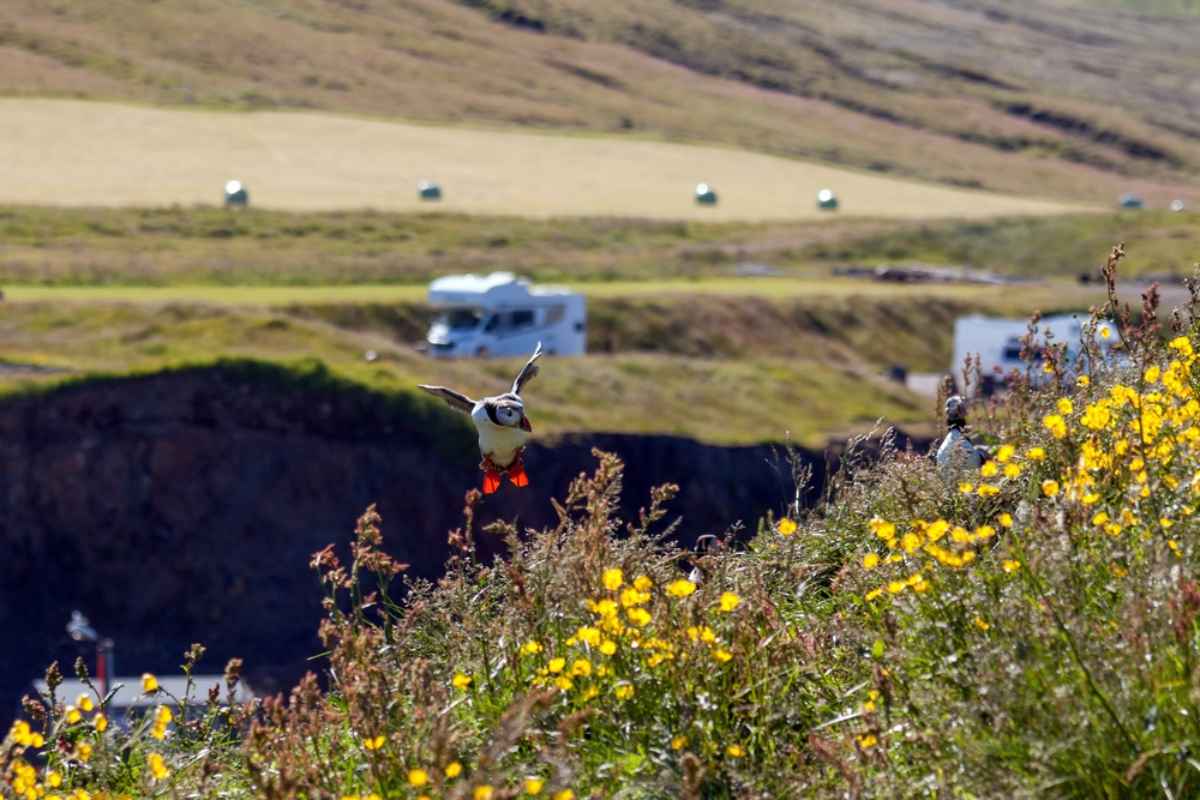
Landscapes turn green as Iceland moves into spring. Snowmelt pushes waterfalls like Gullfoss and Skógafoss to powerful flows. Coastal cliffs also become lively as puffins return to their nesting sites, especially around South Iceland, with the puffin season typically lasting through August.
|
Aspect |
May Highlights |
What to Expect |
|
Temperature |
3°C to 10°C (37 to 50°F) |
Mild spring weather |
|
Daylight |
18 to 20 hours |
Very long days |
|
Weather |
Fewer storms |
More stable travel |
|
Highlights |
Waterfalls, puffins, green landscapes |
Quieter than summer |
June is when Iceland fully settles into summer. For first-time visitors looking for long days and stable travel conditions, June is often considered one of the best times to go, along with July and September.
Early summer brings mild temperatures across the country. Expect averages around 5°C to 13°C (41 to 55°F). Rain showers still appear occasionally, but they usually pass quickly. Winds tend to be lighter compared to the winter months.
June is famous for the midnight sun. Iceland receives nearly 24 hours of daylight, which means there is no real darkness. This gives travelers more freedom to explore late into the evening without worrying about losing daylight, and it also makes June one of the best times of year for photography.
Nature is at its most active. Waterfalls like Skógafoss and Dettifoss surge with snowmelt, hiking trails reopen, and puffins remain active along coastal cliffs. Many people begin full Ring Road trips during this month. Adventure activities also expand, including the Fálkaklettur Via Ferrata near Reykjavík.
|
Aspect |
June Highlights |
What to Expect |
|
Temperature |
5°C to 13°C (41 to 55°F) |
Mild summer weather |
|
Daylight |
Nearly 24 hours |
Midnight sun |
|
Weather |
Occasional rain showers |
Generally stable |
|
Highlights |
Waterfalls, puffins, hiking |
Start of peak travel season |
July is the warmest month of the year. If you are deciding on the best time to visit Iceland for reliable weather and full access to the country, July often delivers the easiest conditions.
Summer is well established by July. Temperatures usually sit between 7°C and 14°C (45 to 57°F), making it one of the most comfortable months for outdoor activities. Rain still appears occasionally, but storms are far less disruptive than in winter.
Nearly 24 hours of daylight continue through July. Darkness never really arrives, which means you can explore late into the evening without worrying about daylight disappearing.
July opens the entire country. Remote regions like the Westfjords, the East Fjords, and the Highlands are accessible, and hiking trails are fully active. It is also the best time for wildlife, especially for whale watching, with some of the best whale watching tours departing from Húsavík and puffins still easy to spot along coastal cliffs.
|
Aspect |
July Highlights |
What to Expect |
|
Temperature |
7°C to 14°C (45 to 57°F) |
Warmest month |
|
Daylight |
Nearly 24 hours |
Midnight sun continues |
|
Weather |
Stable summer conditions |
Occasional rain |
|
Highlights |
Highlands, whale watching, hiking |
Peak summer access |
August feels like late summer in Iceland. The peak crowds from July begin to ease, but conditions across the country still remain very favorable for exploring.
Temperatures cool slightly compared to July. Expect averages between 6°C and 13°C (43 to 55°F). Rain showers become a little more common toward the end of the month, though they usually pass quickly rather than turning into major storms.
Days gradually shorten but remain long. Iceland still receives roughly 16 to 19 hours of daylight, giving plenty of time to explore without rushing between stops.
Early August remains busy, but the atmosphere becomes noticeably calmer later in the month. Waterfalls continue to run strong, and hiking trails stay fully accessible. Late August also marks the first possible return of Northern Lights on very clear nights.
|
Aspect |
August Highlights |
What to Expect |
|
Temperature |
6°C to 13°C (43 to 55°F) |
Mild late summer weather |
|
Daylight |
16 to 19 hours |
Long days continue |
|
Weather |
More passing rain showers |
Still fairly stable |
|
Highlights |
Hiking, waterfalls, early aurora chance |
Crowds ease late month |
September marks the start of autumn in Iceland. If you are asking when is the best time to visit Iceland, September is often seen as the best choice if you only have one chance to go, combining fewer crowds, good travel conditions, and darker nights for aurora season.
Temperatures begin to cool as autumn settles in. Expect averages between 2°C and 9°C (36 to 48°F). Rain showers become more frequent, and winds pick up, especially along the coast, but conditions are still manageable across most of the country.
Daylight drops to roughly 12 to 14 hours. Days are shorter than summer, but there is still plenty of time to explore before sunset.
Autumn colors spread across valleys and hillsides as vegetation turns shades of yellow and red. Northern Lights viewing returns on clear nights, and whale watching tours remain active before winter conditions arrive.
|
Aspect |
September Highlights |
What to Expect |
|
Temperature |
2°C to 9°C (36 to 48°F) |
Cool autumn weather |
|
Daylight |
12 to 14 hours |
Shorter days |
|
Weather |
Wind and rain increase |
Still manageable |
|
Highlights |
Autumn colors, Northern Lights, whale watching |
Quieter attractions |
October feels like the transition into winter. If you are deciding on the best time of year to visit Iceland for quiet landscapes and dramatic weather, October offers a very different atmosphere compared to summer.
Autumn fades quickly as colder air settles in. Temperatures usually range between 0°C and 6°C (32 to 43°F). Rain becomes more frequent, and strong winds sweep across the island. In higher areas, the first snowfall of the season often appears.
Daylight begins dropping quickly. Early October still sees around 10 to 12 hours of light, but by the end of the month, that can fall closer to 7 to 9 hours.
Crowds drop significantly after September. Landscapes shift toward darker autumn tones, and waterfalls often freeze along the edges. Northern Lights viewing improves as nights grow longer, and geothermal pools feel especially inviting in colder weather.
|
Aspect |
October Highlights |
What to Expect |
|
Temperature |
0°C to 6°C (32 to 43°F) |
Cold autumn weather |
|
Daylight |
7 to 12 hours |
Rapidly shortening days |
|
Weather |
Rain, wind, early snow |
Unpredictable conditions |
|
Highlights |
Northern Lights, hot springs, quiet landscapes |
Low tourist numbers |
November feels like winter arriving early. If you are deciding when to visit Iceland for Northern Lights and quiet landscapes, this month delivers dark skies but also some of the toughest weather of the year.
Cold and unstable conditions return across the island. Temperatures are typically between -1°C and 4°C (30 to 39°F). Rain, sleet, and snow often move through quickly, and strong winds are common along exposed coasts.
Daylight drops to about 5 to 6 hours. Most usable light arrives around midday, which limits how much you can realistically do in a single day.
Tourist numbers are very low. Popular areas such as the Golden Circle or the South Coast feel noticeably quieter. Northern Lights viewing improves thanks to long dark nights, and geothermal pools become even more appealing in colder weather.
|
Aspect |
November Highlights |
What to Expect |
|
Temperature |
-1°C to 4°C (30 to 39°F) |
Early winter cold |
|
Daylight |
5 to 6 hours |
Very short days |
|
Weather |
Snow, sleet, strong winds |
Frequent weather changes |
|
Highlights |
Northern Lights, quiet attractions |
Off-season atmosphere |
December is deep winter in Iceland. If you are trying to decide the best time to visit Iceland for festive atmosphere and Northern Lights, December offers both, but daylight and weather are limiting factors.
Winter conditions dominate across the country. Temperatures usually range between -2°C and 3°C (28 to 37°F). Snowfall is common, and strong winds can sweep across the island, especially along exposed coastal areas.
December has the shortest days of the year. Around the winter solstice, daylight drops to roughly 4 hours, with most usable light appearing around midday.
December brings a strong holiday atmosphere. Reykjavík lights up with decorations and Christmas markets, while winter scenery surrounds the capital. Seasonal activities include the Icelandic Christmas Advent Driving Tour and the New Year's Firework Cruise, where fireworks illuminate Reykjavík’s harbor at midnight.
|
Aspect |
December Highlights |
What to Expect |
|
Temperature |
-2°C to 3°C (28 to 37°F) |
Cold winter conditions |
|
Daylight |
About 4 hours |
Shortest days of the year |
|
Weather |
Snow, wind, winter storms |
Unpredictable conditions |
|
Highlights |
Christmas events, Northern Lights, New Year fireworks |
Festive winter atmosphe |
The Northern Lights season in Iceland runs from September to March. These months provide the darkness needed to see auroras clearly across the country.
Auroras are only visible when the sky is dark. During the summer, Iceland experiences nearly constant daylight, so the Northern Lights simply cannot be seen. Once autumn arrives and nights return, the viewing window opens again.
Clear skies are equally important. Even strong solar activity will be hidden if clouds cover the sky.
Some months offer a better balance between darkness and manageable travel conditions.
A campervan gives you mobility. If clouds move in, you can drive to clearer skies away from cities and light pollution. Many Campervan Reykjavik renters plan shoulder-season trips specifically to improve their Northern Lights chances.
|
Month Range |
Aurora Visibility |
Travel Conditions |
Notes |
|
September |
Good |
Stable |
Early aurora season |
|
October |
Very good |
Mixed weather |
Longer nights |
|
November - February |
Excellent |
Challenging winter |
Longest darkness |
|
March |
Very good |
Improving conditions |
Last strong aurora window |
Different months suit different travel priorities. The table below summarizes the most practical options.
|
Travel Priority |
Best Months |
Why |
|
Easiest driving |
June - August |
Warmest weather, stable conditions, and full road access |
|
Midnight sun |
June - July |
Nearly 24 hours of daylight for flexible exploration |
|
Northern Lights + road trip |
September, March |
Dark skies return while roads remain manageable |
|
Lowest crowds |
May, September |
Shoulder season with quieter attractions |
|
Budget travel |
April, October |
Lower rental prices and fewer peak-season visitors |
Road conditions in Iceland shift dramatically through the year. Snow, wind, and daylight hours are the main factors that influence how easy it is to drive. If you plan to rent a campervan, understanding these seasonal differences helps you plan realistic routes and driving distances.
Winter is the most challenging driving period in Iceland.
Most winter trips focus on Route 1, the Golden Circle, and the South Coast. Driving days are usually shorter due to weather and limited daylight.
Spring is a transition period.
Driving conditions improve noticeably, though weather can still change quickly.
Summer offers the easiest driving conditions.
This is the season when most people drive the full Ring Road or explore the Highlands.
|
Season |
Road Conditions |
Key Driving Notes |
|
Winter (Nov-Mar) |
Snow, ice, strong winds |
Short driving days |
|
Spring (Apr-May) |
Wet roads, melting snow |
Conditions improving |
|
Summer (Jun-Aug) |
Clear roads, stable weather |
Best for long routes |
In Iceland, checking the weather and road status is part of daily life. Conditions change quickly, and locals know that ignoring forecasts can turn a simple drive into a dangerous one.
Most Icelanders check two official sources before driving.
Weather in Iceland can shift within minutes. Strong winds, snow, and sudden storms can make certain roads unsafe.
Checking these tools helps you:
Summer is the easiest, not always the best. You get long days and easier roads, but also higher prices, fuller campsites, and less drama if you want Iceland looking wild.

May and September usually give the best value. You avoid peak summer pricing, keep decent daylight, and still get accessible roads, which is more useful than chasing the warmest month.
January is usually the hardest month for a road trip. Short daylight, frequent storms, icy roads, and limited campsite options make planning slower, riskier, and far less forgiving.
Sometimes yes, sometimes no. You gain dark skies for auroras, but you also accept tougher weather, shorter driving windows, and more uncertainty, which can ruin overly ambitious itineraries fast.
Yes, if you care about space, value, and flexibility. May and September often feel more balanced than July, with fewer crowds, lower costs, and enough daylight to travel properly.
The best time to visit Iceland depends on what you want from the trip. Summer offers the easiest driving and endless daylight, while spring and autumn balance crowds, prices, and scenery.
Winter brings dramatic landscapes and Northern Lights, but requires more planning. There is no single perfect month, only the season that fits your travel goals. If you are planning to explore Iceland by road, choosing the right timing can make a huge difference to your experience.
More Iceland Stories to Explore
Discover more tips and tales to fuel your next saga
Join thousands who have booked with us
Iceland's most booked campervan of 2025 is waiting. Secure yours today!
Your rental comes with:
Handy Extras
Essential Insurance Plan
Unlimited Mileage
Flexible Cancellation