17 August
15 min read
How to Heat Your Rental Campervan in Iceland


6 April 2026
21 min read
Yes, Iceland is one of the best places on earth to see the Icelandic solar eclipse, but only if you stay mobile. The problem is simple. Weather changes fast, and fixed accommodation will box you in at the worst moment.
August is already peak season, and this event will push availability to the limit. Waiting is not a strategy. Renting gives you control. You can move with the forecast, avoid cloud cover, and position yourself properly before totality starts.
That is why people who plan ahead rent a campervan in Iceland. It is not about comfort. It is about actually seeing the eclipse.
A total solar eclipse is when the moon fully blocks the sun, not partially, and you experience complete darkness for a short period. In Iceland, totality will last roughly 1 to 2 minutes, depending on location, and anything outside that path is just a partial eclipse.

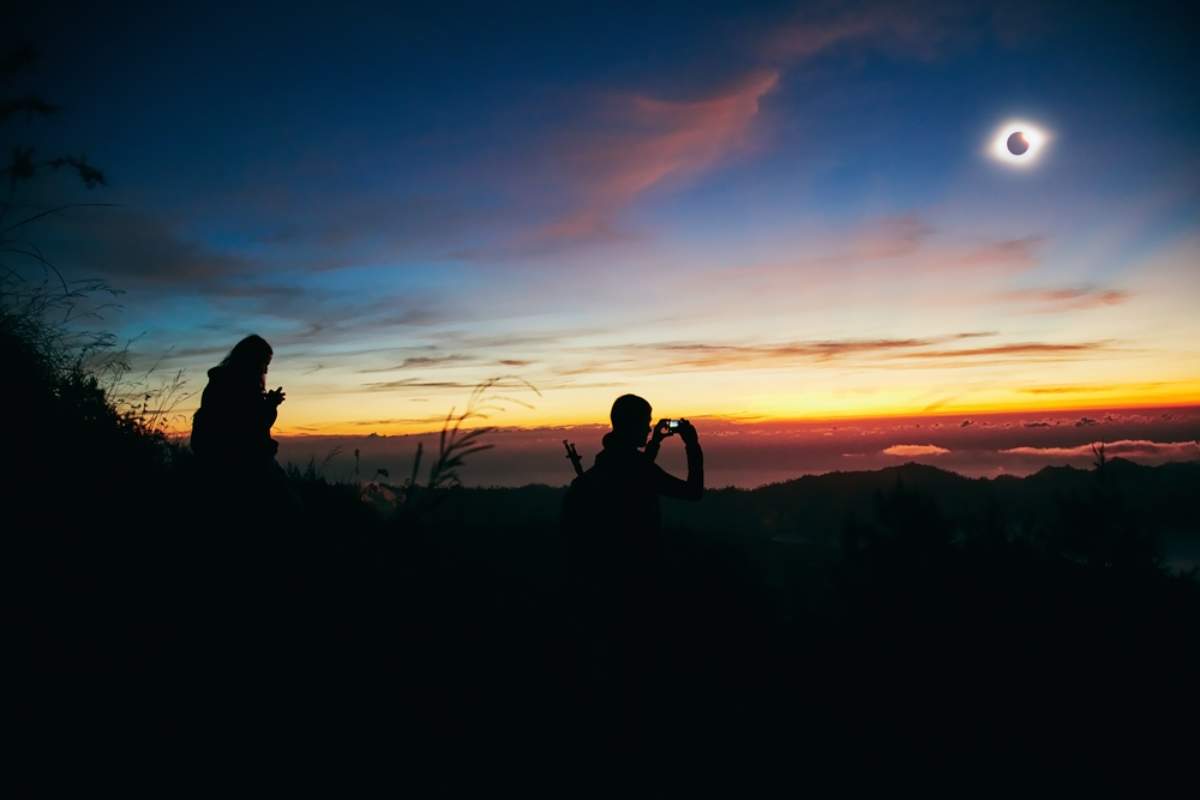
During totality, daylight drops fast. The sky darkens, temperatures can fall by a few degrees within minutes, and visibility shifts across the horizon. You will see the sun’s corona directly, which is not visible during a partial eclipse. This is the part people travel for.
Events like this are rare in this region. The next comparable opportunity is decades away, not something you can catch next year. Crowds tend to go quiet, then react all at once when totality peaks. It is brief, precise, and easy to miss if you are not in the right place at the right time.
Not all of Iceland gets full totality. Only a narrow band does, and if you miss it, you get a partial eclipse. That’s the difference between a decent view and the actual event. Location matters more than anything else here. So does mobility. Fixed plans fail fast in Iceland.
The Icelandic solar eclipse in 2026 happens on August 12. Partial phases run roughly from 16:47 to 18:47 GMT, which is mid to late afternoon locally. Totality hits around 17:43 to 17:50 GMT. That is your window. About 6 to 7 minutes nationwide, but any single spot gets closer to 1 to 2 minutes. Miss that, and it’s over. You need to be set up early, not still driving.

The path of totality is about 160 km, around 100 miles wide. That is where the sun is fully blocked. It enters through the Westfjords, moves across Snaefellsnes, clips the Reykjavík area, then exits via Reykjanes. Western regions get longer totality. Head east or too far south, and it drops to partial.
|
Location |
Totality Duration |
Avg. Cloud Cover |
|
Borgarnes |
40 seconds |
74% |
|
Keflavík |
1m 39s |
73% |
|
Reykjavík |
1 minute |
76% |
|
Ísafjörður |
1m 31s |
78% |
Iceland’s eclipse in 2026 is one of the best viewing opportunities globally, mainly because you get strong totality in a place where you can actually move around. That combination is rare.
You’re dealing with a sparsely populated country, great road access, and wide open terrain. There are no dense cities locking you in or restricted viewpoints. Compared to places like Spain, where crowds stack up fast, or Greenland, where access is limited, Iceland gives you options. And options matter more than scenery when the sky decides everything.
Iceland sits close to the centerline, which means longer totality. Roughly 1 to 2 minutes, depending on where you are. Western regions push past 2 minutes. Reykjavík sits closer to 1 minute. That difference sounds small. It isn’t. More time means less pressure. You can actually observe, adjust, and shoot without rushing through it.
There’s almost no light pollution here. Once totality hits, it gets properly dark. You’re surrounded by open coastlines, lava fields, and flat horizons. No buildings or big trees blocking the view. That 360° visibility makes a difference. You see the full sky react, not just the sun.
August in Iceland sits between summer and early autumn, with mild temperatures but unstable conditions. Expect daytime highs around 10 to 15°C, about 50 to 59°F, and cooler nights dropping to 8 to 10°C, around 46 to 50°F.

Daylight is not a limitation. You get roughly 16 hours, with sunrise around 05:00 and sunset near 21:30. That gives you time to position well before the eclipse window in the late afternoon.
Cloud cover is the main issue. Expect 70 to 80 percent coverage across most regions. Rainfall is relatively low for Iceland, but light showers and drizzle are common. Conditions can differ within 100 km, about 62 miles, so local forecasts matter.
Wind is consistent. Speeds often reach 20 to 40 km/h, around 12 to 25 mph, with stronger gusts in exposed areas.
There is no single best place for Iceland’s eclipse in 2026. The weather decides that on the day. Clouds can roll in anywhere, even in regions with good forecasts hours earlier. So picking one fixed viewpoint and hoping for the best is a mistake.
What actually works is choosing a region with multiple options nearby, then adjusting based on real conditions. Think in terms of zones, not pins on a map. Western Iceland gives you the strongest totality, but each region has trade-offs.
Access, road quality, services, and flexibility all matter. The goal is not the ‘perfect spot.’ The goal is to be in the right place at the right time.
The Westfjords give you the longest totality in Iceland. That alone makes it one of the strongest options for Iceland’s eclipse in 2026. Durations here reach just over 2 minutes in areas like Látrabjarg, with places like Ísafjörður and Straumnes slightly shorter.

You are close to the centerline, which is what matters. More time, less pressure. But access is the trade-off. Roads are slower, often gravel, and distances feel longer than they look. Fuel stations are limited. Campsites are fewer. You need to plan properly, not improvise at the last minute.
Crowds will be lower compared to southern regions. That helps. You get space, open views, and fewer people competing for the same viewpoint. If conditions are clear here, it is one of the best possible regions. If not, getting out quickly is harder. That’s the risk.
Snæfellsnes is the balanced option. You get strong totality, just over 2 minutes in some areas, without committing to remote driving. It sits about 135 km, roughly 84 miles, from Reykjavík.
Roads are mostly paved, and distances between locations are manageable. You can shift between coastlines, lava fields, and small towns within short drives. Places like Kirkjufell, Djúpalónssandur, and the Snæfellsjökull area give you multiple viewing angles. Not because one is better, but because you have options if conditions shift.
Services are easier here. Fuel, food, and campsites are more available than in the Westfjords. That reduces risk. It also works well as a fallback. If the Westfjords cloud over, this is the next logical move. You are still inside strong totality, just with slightly more people around.

Reykjanes is the practical choice. Short distances, easy access, and still inside totality. You are minutes from Keflavík Airport, which makes this region useful for tight itineraries. Totality here reaches around 1 minute 30 seconds to 1 minute 45 seconds, depending on location. Shorter than the west, but still a full experience.
The landscape is open and volcanic. Flat terrain, coastal viewpoints, and minimal obstructions. Places like Reykjanestá or Garður give you clear horizons without needing long drives. The advantage here is simplicity. You spend less time driving and more time positioned and ready.
The downside is obvious. More people, less flexibility, and slightly shorter totality. If the weather shifts, your options are more limited compared to larger regions.
Reykjavík works, but it is not the strategy. It is the backup. The totality here is just over 1 minute. You are still inside the path, so you will see the full eclipse. But the environment changes the experience. Buildings, crowds, and limited open space all come into play.
Places like Perlan offer elevated views, but you are sharing that space with a lot of people. Movement is restricted. If conditions are not ideal, you cannot adjust easily. Cloud cover is similar to that of the surrounding regions, so staying here does not reduce risk.

It just reduces flexibility. If you are already in the city and conditions look good, it works. Otherwise, it is better used as a fallback option when other regions are not viable.
Most people planning the Iceland solar eclipse in 2026 think in terms of locations. Reykjavík. Snæfellsnes. Westfjords. That’s the wrong starting point.
The people who actually see totality don’t commit too early. They plan around options. Multiple regions. Short driving windows. Backup positions are already mapped out before the day.
That approach changes how you structure the trip. Driving a camper in August is straightforward on main routes, but more importantly, it lets you stay within reach of different regions without locking yourself into one.
For the Iceland solar eclipse, the weather is local, not national. Conditions can change within 50 to 100 km, about 30 to 62 miles, in a few hours.
That matters more than any ‘best location’ list. Using live forecasts on Vedur.is, you can adjust on the day instead of committing early. Fjords, peninsulas, and coastal areas behave differently, so one region can clear while another closes in.

Crowds follow the obvious spots. Kirkjufell and Látrabjarg will attract people. A campervan lets you skip that. You can pull off onto quieter gravel roads or secondary viewpoints without competing for space.
For Iceland’s eclipse in 2026, availability is the real bottleneck. We have seen this pattern before with peak summer. August already pushes occupancy high across Reykjavík, Snæfellsnes, and the Westfjords. Add a major event, and hotels disappear months ahead.
The problem is not just price. It is commitment. Once you book a hotel, your location is fixed, even if conditions shift. Campervans go first for a reason. People planning around events choose them because they remove that constraint.
In past high-demand periods, our best vehicles were gone long before the season started. Waiting limits your options fast. Not just availability, but vehicle type and location.
You cannot wild camp freely in Iceland. That is enforced. You use designated campsites. There are over 200 sites across the country, with strong coverage along the Ring Road and western regions. Areas like Route 54 on Snæfellsnes and Route 60 in the Westfjords give you multiple campsite options within short driving distances.

Costs are typically around $15 to $25 per person per night. The strategy is simple. Position yourself the night before within reach of multiple viewing areas. Places near Ólafsvík or Garður work well because you can adjust in the morning without long drives.
The mistake is waking up far away and trying to chase conditions at the last minute. That usually ends with traffic, delays, and poor positioning. You can also check out our list of the best campsites in Iceland that we know about.
At this point, the question is not where to watch Iceland’s eclipse in 2026. It is about how to plan the trip so you are in a position when it happens.
This is where most plans fall apart. People book too late, underestimate distances, or lock themselves into routes that don’t leave room to adjust.
A good plan here is not rigid. It is built around timing, availability, and realistic driving ranges. You are working with a short viewing window and conditions that can change quickly.
Get the setup right, and the rest becomes easier. Get it wrong, and no location will save it.
Book as early as possible for Iceland’s eclipse in 2026, ideally 6 to 12 months in advance. Waiting reduces availability fast and limits your options.
August is already peak season, and this event adds pressure across the entire fleet. The most capable vehicles, especially 4x4 campers suited for varied road conditions, are usually the first to go. Once they are booked, you are left with fewer choices and less flexibility in your route.
Late bookings also push prices higher. You may still find something, but not necessarily what fits your plan.

Plan your route for Iceland’s eclipse in 2026 based on weather, not a fixed itinerary. The best route keeps multiple regions within reach on the same day.
If forecasts are stable in the west, head directly from Keflavík along Route 1 and 60 toward the Westfjords. That is roughly 400 to 450 km, about 250 to 280 miles, to Ísafjörður. Position near Dynjandi or Flókalundur so you can reach key viewing areas quickly.
If conditions are mixed, run a flexible loop between Reykjavík, Snæfellsnes, and the Westfjords. These regions can sit within 100 to 200 km, around 62 to 124 miles, of each other, depending on your position. Always keep a Plan B and C within driving range.
Most key regions for Iceland’s eclipse in 2026 are accessible from Keflavík or Reykjavík, but you need to allow proper time to get into position. This is not a quick day trip.
From Keflavík, Reykjanes is about 25 km, around 15 miles, taking 25 to 30 minutes. Reykjavík is 50 km, about 31 miles, roughly 45 minutes. Snæfellsnes sits 135 to 180 km away, about 84 to 112 miles, taking 2 to 2.5 hours on paved roads.
The Westfjords are different. Reykjavík to Ísafjörður is around 450 km, about 280 miles, and takes 6 to 8 hours with mixed road surfaces. Driving all the way to Látrabjarg pushes past 500 km, over 310 miles, with travel times reaching 8 to 10 hours.
Roads in August are open and generally stable. Main routes like Route 1, 54, 60, and 61 are accessible for standard campervans. Gravel sections are common in the Westfjords and slow things down.
|
From |
To |
Distance (km/miles) |
Time |
|
Keflavík Airport |
Reykjanes (Garður) |
25 km / 15 mi |
25-30 min |
|
Keflavík Airport |
Reykjavík |
50 km / 31 mi |
45 min |
|
Reykjavík |
Snæfellsnes (Ólafsvík) |
135-180 km / 84-112 mi |
2-2.5 hrs |
|
Reykjavík |
Westfjords (Ísafjörður) |
450 km / 280 mi |
6-8 hrs |
|
Snæfellsnes |
Westfjords (via ferry) |
100 km / 62 mi (sea) |
2.5 hrs |
|
Keflavík |
Látrabjarg (Westfjords) |
500+ km / 310+ mi |
8-10 hrs |
What you pack for the Iceland solar eclipse 2026 directly affects whether you actually enjoy it or struggle through it. Here’s what we recommend you bring along:
You need proper viewing gear for Iceland’s solar eclipse. Without it, you either miss the detail or risk damaging your eyes.
August looks mild on paper, but exposure makes it feel colder, especially when you are standing still.

Totality is short, and conditions change quickly. Small mistakes here are easy to avoid.
The eclipse is the reason you’re coming. It shouldn’t be the only thing you do. You are already covering long distances and positioning across western Iceland. It makes sense to build the rest of the trip around those same regions instead of adding unnecessary detours. Done properly, the eclipse becomes part of a broader route, not a standalone stop.
You are already moving through western Iceland for Iceland’s eclipse in 2026. Stick to what’s on your route and skip long detours.

Westfjords
Snæfellsnes Peninsula
Reykjanes Peninsula

No, you should not plan on seeing northern lights after Iceland’s eclipse in 2026. Conditions are not in your favor. August still has extended daylight. You get around 8 to 9 hours of darkness, but it is not fully dark. Twilight can stretch close to 23:00, which reduces visibility significantly.
Aurora activity is also lower around this period following the summer solstice. Even if activity increases, visibility remains limited. Realistically, your chances sit below 10 percent. Later in August, conditions improve slightly, but not enough to build a plan around it.
Start planning now for Iceland’s solar eclipse in 2026. Waiting reduces your options quickly.

Availability is the real constraint. August is already busy, and this event pushes demand higher across vehicles and key regions. The best campervans, especially 4x4 options, are usually booked months in advance. Late planning limits where you can go and how you structure your trip.
The second mistake is overplanning. Fixed routes and tight schedules do not hold up well in Iceland. Conditions shift, and rigid plans fail when they do.
Then you will not see the totality clearly. Cloud cover is the main risk. Mobility improves your chances, but it does not guarantee visibility anywhere in Iceland.
No, you need a clear view of the sky. Use the camper for positioning and shelter, then step outside for full visibility during totality.
Yes, especially near popular spots. Roads near key viewing areas can slow down. Position yourself early and avoid last-minute driving during the eclipse window.
Not always, but it helps. Main roads are accessible with 2WD, but 4x4 gives more confidence on gravel roads and remote areas like the Westfjords.
Not fully. Travel times are often underestimated. Wind, gravel roads, and terrain slow you down. Always build buffer time into your route planning.
Not usually. Staying fixed increases risk. It is better to stay within a region that gives you multiple viewing options within a short driving distance.
Some will be busy, especially near popular regions. Iceland has a wide campsite network, but positioning early gives you better access and less pressure.
Yes, but it limits your options. Short trips reduce your ability to adjust location. Longer trips give you more flexibility to respond to changing conditions.
Inside this article
More Iceland Stories to Explore
Discover more tips and tales to fuel your next saga
Join thousands who have booked with us
Iceland's most booked campervan of 2025 is waiting. Secure yours today!
Your rental comes with:
Handy Extras
Essential Insurance Plan
Unlimited Mileage
Flexible Cancellation